Tuesday, April 3, 2012

The Hunger Games (2012)

A better-than-average action film thanks to a strong lead, suspenseful pacing, and unsettling themes.


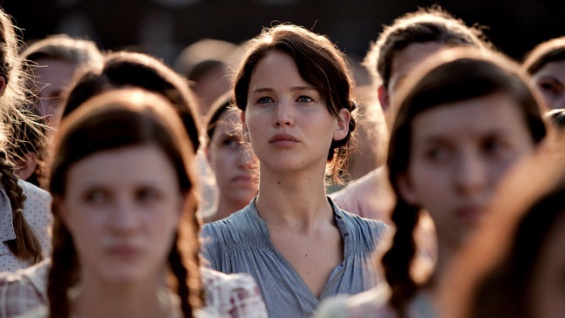
I disliked Suzanne Collins’s novel, “The Hunger Games.” I found the plot predictable, the characters paper-thin and the writing style simply terrible. I was ambivalent towards the protagonists and could care less about the outcome. But the film was a different story. The plot, while still predictable, translated incredibly well to screen. The characters were rich, giving me heroes I could root for and a conclusion I cared about.

The Hunger Games tells the story of a totalitarian government that, in order to keep its subjects in line, forces each of its districts to send a boy and a girl tribute to compete in a gladiatorial event where all will fight to the death. In District 12, Katniss Everdeen volunteers as tribute, taking the place of her sister. Katniss is thrust into the competition and must not only contend for her life but wrestle with feelings for her male counterpart, Peeta, and her hometown boyfriend, Gale. The film generally stays close to the original plotline but makes a few minor changes which significantly improve on the novel.

What I immediately appreciated about the film was its raw emotion. The early moments that Katniss shares with her little sister, Prim, are beautiful. My favorite scene, where Katniss volunteers to take her sister’s place in the games, is heartbreaking. Katniss also shares some short, yet heartfelt, moments with Hunger Games ally Rue. Jennifer Lawrence brings life to the character of Katniss, her eyes conveying depth and maturity. This is not the shallow and annoying character from the book. But other than Katniss, the characters had little development—most evidently, Josh Hutcherson’s Peeta. The scene stealers were Stanley Tucci as Hunger Games emcee and Woody Harrelson as drunken mentor Haymitch.

The film raises some interesting questions involving situational ethics, murder, self defense, and rebellion against government. If Katniss is to win the games, she must kill, but should she? The film causes the audience to identify with Katniss and forces them to agonize along with the heroine as she’s forced to make these difficult decisions. Ultimately, the film gives no answers.

The shaky, handheld camerawork severely detracted from the film. Shaky cam is a cheap way to [try to] generate excitement. The constant motion was headache-inducing and made it difficult to follow the action at times. This was most evident in the climactic scene with the rabid dogs. The camera shook and jumped about so much it was difficult to follow the action on screen, causing annoyance. Instead of bolstering suspense, it diminished it.

James Newton Howard’s score stood out as painfully generic. The cues are lifeless and there’s nothing new or creative. It’s a disappointing offering from one of cinema’s greatest composers.

The violence is this film’s only cautionary element; there’s very little in the way of bad language and no sexual content. But, unlike most films, the violence is never glorified or even cathartic. Many violent films produce catharsis, for example, at the death of a villain, at the moment of perfectly executed vengeance or when a character gets what’s coming to them. This is not the case here. The participants in the Hunger Games are forced to kill, and only a small minority of participants relish this fact. The characters never revel in the killing, nor does the audience. There is no glee in these deaths, only sadness. Tribute after tribute falls to the violence, and while the fatalities are not graphic, they are haunting. The brutality of the film stuck with me for hours after the end credits.

This is the rare film that drastically improves upon its source material (although that’s not saying much). The story works much better on film, due mostly to its solid pacing and strong acting by its lead. The film has some flaws, mostly its shaky camera, a few weak performances, occasionally weak dialogue and generic score but provides two and a half hours of escapist entertainment. Happy Hunger Games, everyone.

Monday, February 13, 2012

2011 Best Pictures in Few Words

For six years, an R-rated film has won the Best Picture award, and since 2005 at least 60% of nominees were rated R (100% in 2006 and 2008). But this year only one of the nine nominees is rated R. The R-rated hopefuls of the year were almost entirely overlooked in favor of mostly-“clean” PG-13 and PG films.

We now review, in short, the Best Picture nominees that we’ve seen (so far).


Midnight in Paris

A struggling writer is transported back into artistically-inspiring 1920s Paris, where he meets a pretty girl and must choose between past and present. Owen Wilson’s constantly whiny delivery makes an otherwise excellent film unbearable.


The Tree of Life

A mother seeks answers from God about her son’s death and a brother seeks to connect with his Creator. Half-hour interludes filled with nothing but music and scenery will either bore or enrapture in this incredible film.


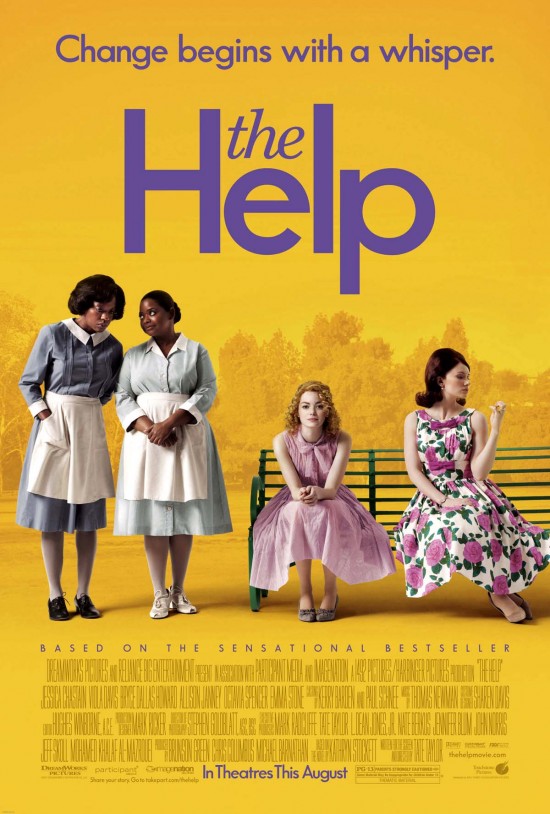
The Help

A spunky young Southerner seeks to stop segregation and racism by writing a book from the perspective of the servants. Spot-on scripting, award-worthy performances and some delicious comedy make this a must-see.


A losing Oakland Athletics team decides to revolutionize baseball by playing the odds instead of good looks, and pulls out shocking wins. A lack of heart and interesting characters keeps this true story from hitting a home run.


The Descendants

A father seeks to reconnect with his daughters after finding out that his now-comatose wife had been cheating on him. Outstanding performances, redemptive story, and stellar, albeit profane, scripting make this a favorite.


Hugo

A young boy lives in a Paris train station where he encounters film legends, cute girls and angry constables. A truly gorgeous film with brilliant direction but weak where it really counts with story and character.


The Artist

An egotistical silent-movie star copes with the loss of fame and fortune as “talking pictures” captivate Hollywood. This daring silent film overflows with nostalgia and boasts a dramatic but heartwarming story and gorgeous soundtrack. It’s this year’s Oscar front-runner.


Thursday, January 12, 2012

Angels & Demons (2009)

Provoking dialogues and beautiful settings enhance a constantly twisting plot and great action. 


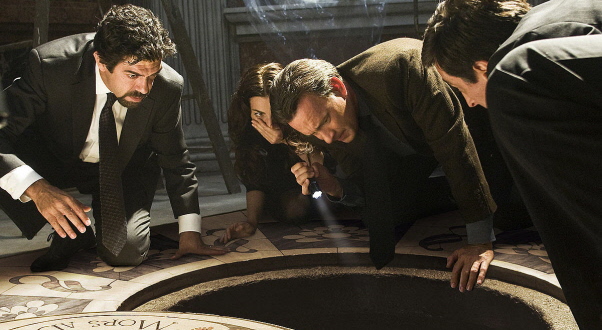
When I first saw advertisements for Angels & Demons, I completely wrote it off. I hated The Da Vinci Code and a sequel held no interest for me. At the urging of a friend, however, I rented it. I’m glad I did. Angels & Demons is nothing like its predecessor, replacing the troublesome theological themes with thought-provoking commentary and the poor film-making with taut pacing and direction.

The pope has died and the College of Cardinals has congregated in the Sistine Chapel to appoint a new Holy Father. When the Preferiti (the top choices for pope) are kidnapped and Vatican City is put under threat of destruction, the Swiss Guard turn to Robert Langdon for help. Langdon is swept into a world of intrigue, lies and secret societies—less than eight hours to rescue the kidnapped priests from death and stop an explosion that will destroy Vatican City. On his quest, Langdon uncovers a conspiracy permeating the highest echelon of Vatican hierarchy and realizes that he can trust no one.

The plot reminded me greatly of (while far surpassing) National Treasure. There are riddles to solve, treasures to hunt, betrayals by close allies and a completely shocking twist ending. Yes, it’s often ridiculous and preposterous but the film is so entertaining that there’s no time to think about how far-fetched it is. The characterization is strong; each player is constantly ambiguous as to motive and allegiance, making the whodunit a continuous guessing game.

The cast as a whole did a fine job. Ewan McGregor delivered an outstanding performance as the Camerlengo. The character was kind and wise and I immediately rooted for him. I also greatly enjoyed Stellan Skarsgaard, commander of the Swiss Guard. His character was vague and suspicious—I was never sure which side he was on. Tom Hanks was unusually average as Langdon; there was nothing at all special about his performance.

Hans Zimmer has no trouble churning out great action themes. The main theme was a reimagining of Chevaliers De Sangreal from the first film. Zimmer fleshed out the cue with rousing violin solos from the talented Joshua Bell. Much of the soundtrack added suspense with high strings, low bass and pounding drums. It’s great both with and apart from the movie.

The cinematography is amazing, highlighting some of the most famous sights in Rome and Vatican City. The setting is perfectly suited to wide sweeping panoramas and the filmmakers took full advantage of the beauty of both locales. The action scenes were also well filmed, exciting while never jumpy or confusing. An enormous explosion towards the end of the film was stunning.

Another great thing about this film is that there is incredibly little bad language and no sexual content. It’s rated for violence which was, at times, graphic and grotesque. Probably most troubling for many about The Da Vinci Code was the one-sided view of religion, targeting especially God, Jesus, Christianity, and Catholicism. While none of these escape the film unscathed, God is not so much attacked as is man’s view of Him. Cardinal Strauss left me with a profound thought: “Religion is flawed, but only because man is flawed. All men. Even this one."

Like all men, Angels & Demons is also flawed, mostly because of average acting, sometimes clunky dialogue and a preposterous plot. But these flaws are insubstantial while watching the film—you’ll be too caught up in finding out what happens next. The mystery kept me guessing, the action kept me on the edge of my seat, and the themes kept my mind engaged. I was surprised to enjoy this one as much as I did. Recommended.

Sunday, January 1, 2012

The Secret World of Arrietty (2012)

Magical, fanciful and sweet.


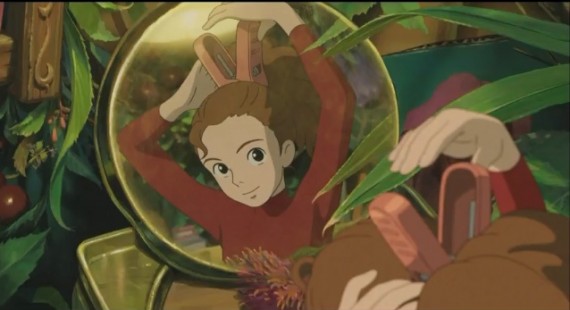
Arrietty marks my first journey into the world of anime, and I’ll definitely be making a return trip. The film has already been released in Japan and the UK, to massive critical acclaim, and will be released in the US later this year. I had the great privilege of attending an advance screening of the American version and I immensely liked what I saw.

The Secret World of Arrietty (loosely based on “The Borrowers”) tells the story of a family of miniature people that lives under the floorboards of a residence. At night, the little people venture out into the dangerous world of human beings to “borrow” things that nobody will miss—a cube of sugar, a tissue, or a small strand of thread. Arrietty violates her parent’s wishes and befriends a young human boy, Sean, living in the house above. When the boy’s caretakers find out about the little people, they will stop at nothing to capture them.

There’s not a whole lot going on with this narrative, no shocking twists, no crazy subplots, but the story is charming and the ending managed to be different than I expected. The interactions between the characters is innocent and sweet and the film hearkens back to a more classic age of animation—an age with no pop-culture jokes, no crude comments, and no sexual references, just kindness and love.

Arrietty and Sean share some beautiful dialogues about the purpose of friendship, family and life. Their conversations are touching and emotional, tugging—though not manipulatively—upon the heartstrings. The rest of the supporting characters are, unfortunately, one-dimensional; more character development would have really improved the film. I was also irritated by the decision to redub the dialogue with American actors. Their voices didn’t fit the characters (with the exception of Arrietty) and they distracted from the story.

The animation is superb. Having never before seen a full-length anime feature, I had no idea what to expect. The vivid animation captured my imagination. The character detail was often minimalistic, but this only added to the vibrancy of the film. The rich colors of Arrietty’s world dazzled my eyes with stunning backgrounds and settings, evidencing meticulous attention to detail. The animators tell the story from the perspective of tiny Arrietty and there are some inventive visuals that reflect this—stamps being used as wall paintings, a pin as a sword, tissues as blankets. The animation is gorgeous and inventive and the film is worth seeing just to appreciate its artistry.

I was also blown away by the sound mixing. Recorded from the perspective of our miniature heroine, the sounds of the human world are magnified, making the giant universe seem menacing, daunting and unknown. The sound of each raindrop is amplified exponentially and ambient noise, such as the hum of a refrigerator, is magnified to near-deafening levels. It’s an experience worth hearing.

Also worth hearing is the perfectly fitting soundtrack. The delightful piano and harp-driven score is punctuated with riffs of acoustic guitar and airy strings. The score is also mixed with original songs written by Cécile Corbel, French-Breton singer and Celtic harpist. Her vocals fit seamlessly in with her soundtrack and add a fanciful, magical feel to the film.

The Secret World of Arrietty is a beautiful film. The storyline is shallow but it’s sweet and heartfelt. The film features some incredible animation, creative sound mixing and an outstanding soundtrack. Watching this movie is a real treat and one that shouldn’t be missed.

Carnage (2011)

Relentless bickering makes it awkward to watch and hard to stomach.


I had a childhood friend whose parents would constantly argue. I would go over to his house and feel intensely awkward watching these altercations unfold. And that’s exactly what director Roman Polanski forces us to do: watch people fight. Even with the enjoyable dark, subversive humor, this movie made me uncomfortable. It’s an interesting movie to watch, but not a fun movie to enjoy.

Based on the play “God of Carnage,” Carnage tells the story of couples Alan and Nancy, and Michael and Penelope. Their sons brawled leaving Michael and Penelope’s boy with two missing teeth and some potentially serious nerve damage. As a show of good faith, Michael and Penelope invite Alan and Nancy over to determine a rational solution and restitution. Alan and Nancy defend their son while Michael and Penelope demand punishment for the harm he’s caused. Soon their friendly meeting turns into a full-out brannigan.

The film feels less like a film and more like a play. It takes place at one location and features only four on-screen characters. The shots are often extended, giving time for the actors to really have at each other. The film moves at a brisk pace, clocking in at only 75 minutes. Honestly, I was glad it wasn’t longer. I could only handle so much of the verbal fracas and towards the end of the film, it began to feel tedious. But this tedium was countered by four outstanding performances, a snappy script and some genuinely hilarious moments.

Christoph Waltz and Kate Winslet play Alan and Nancy, the uppercrust couple whose son did the attacking. John C. Reilly and Jodie Foster play Michael and Penelope, the parents of the attacked. Even in the short time the cool facades are erased, the dark inner characters slowly revealed. The dialogue is quick and the back-and-forth never feels overly scripted. The interactions are organic and watching the film gives you the feeling you’re a fly on the wall in these people’s lives.

But is it something you really want to see? I suppose it is a tribute to the filmmakers that the film does feel so awkward. This was obviously their intent: making everyone uncomfortable at the shenanigans taking place on the screen. But the result isn’t fun; it’s painful and shamelessly embarrassing.

There are some hilarious moments that lend much-needed comic relief. The humor was good but I wouldn’t have minded even more. Running gags about an abandoned hamster, fruit cobbler and an incessantly ringing cell phone were truly hysterical. Some of the funniest gags involve the chaos that ensues as the delicate Nancy becomes increasingly, and explosively, sick after sampling Penelope’s most prized recipe.

While there’s no sexual content or violence, the film earns its R rating with strong profanity. As the argument escalates, so does the language. Towards the end of the film, the obscenities fly in a constant barrage. The coarse verbiage fits the characters as their true, despicable natures are revealed.

Carnage is an interesting little art-house film. It makes the audience feel awkward by forcing them to watch an intense hour-long fight. By the end, it had become tedious and I’d had enough. It is somewhat redeemed by outstanding performances, snappy dialogue and genuine hilarity and great chemistry between the characters. It’s a well made film, I just didn’t particularly love it.

Friday, December 30, 2011

Sherlock Holmes: A Game of Shadows (2011)

Die-hard Doyle fans will be miffed, but the acting, synergy and action make it great.


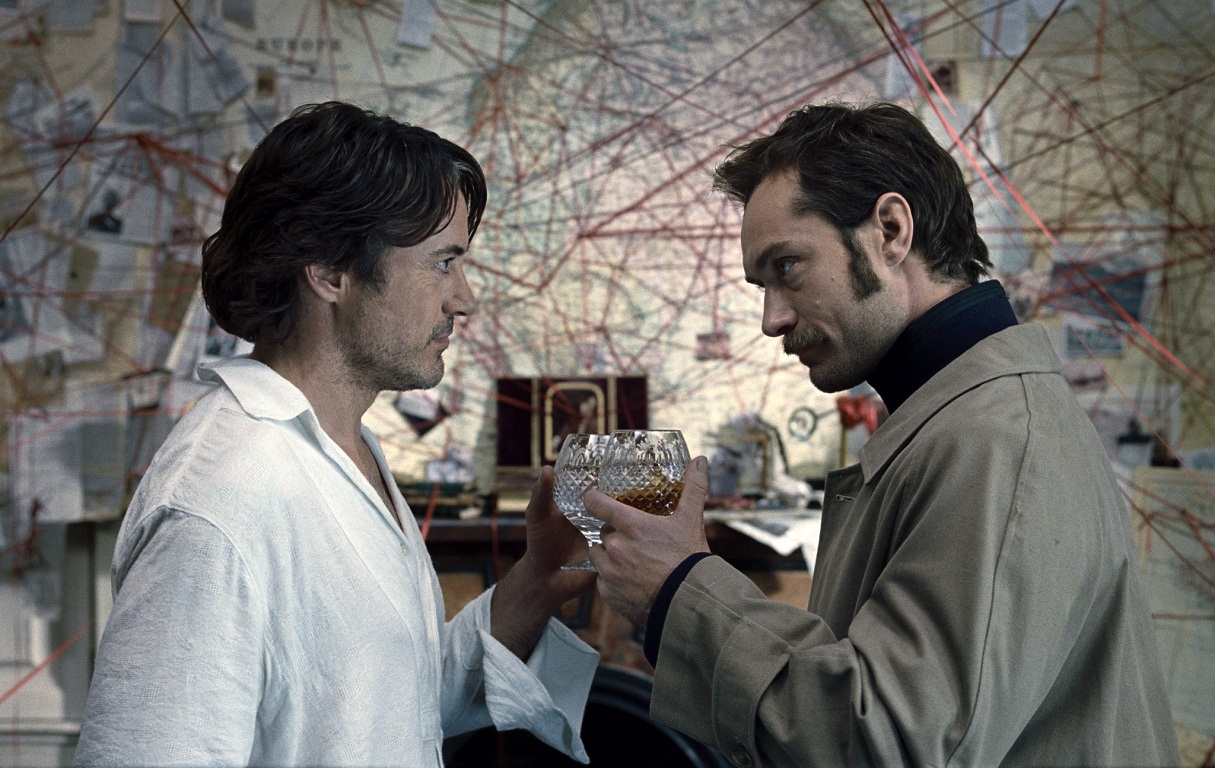
Were Sir Arthur Conan Doyle alive today, I’m sure he would hate the film adaptations of his mystery classics. Unlike Doyle’s subdued and contemplative Holmes, this Holmes, while equally brilliant, is brash, violent and more action star than investigator. Fans of the novels will find this film frustrating, a caricaturization of a beloved hero, streamlined and beefed up for a modern generation. But for those who don’t care, or who can simply pretend it’s not really a Sherlock Holmes story, it’s a supremely fun and surprisingly deep film.

In A Game of Shadows, Sherlock Holmes investigates a random series of bombings around Europe. Anarchist groups are blamed, but Sherlock suspects a deeper conspiracy, revolving around Professor Moriarty. Holmes dons multiple disguises, interrupts Watson’s honeymoon, teams up with a gypsy woman and travels around the world to stop Moriarty. If Sherlock fails, Moriarty will unleash terror upon the entire world.

The filmmakers took some really good risks with the plot, killing off key characters early on. I was kept guessing the whole time, unsure how the mystery would play out. While more a globe-trotting adventure than a typical Sherlock mystery, there are still some signature elements that are reminiscent of its source material. As always, Sherlock’s wit is sharp and his powers of observation keen. Through the wonder of cinema and creative camera tactics, I was let in on Holmes’s deductive processes allowing me to share in his “AHA!” moments.

The plot is bolstered by great performances and witty dialogue. Robert Downey, Jr.’s Holmes and Jude Law’s Watson exude personality and their perfect on-screen synergy results in many hilarious exchanges. But the real show-stealers are the interactions between Holmes and Moriarty (excellently portrayed by Mad Men’s Jared Harris). The final showdown between the two is riveting, as much a battle of wits as a battle of strength, their minds so alike, yet one completely evil and one unabashedly good. The constant repartee between the characters elevates this movie above a typical action film.

But the action scenes are also very good. There are loads of chases, gunfights and explosions. Some of these scenes are a bit jumpy and hard to follow, but they are still exciting and fun to watch. Holmes demonstrates his prowess at hand-to-hand combat in an early scene, taking on four huge thugs. While typically this would seem absurdly unrealistic, Holmes’s narration demonstrates that with a little observation, dispatching these men is effortless.

The look and feel of the Holmes films is quite unique. The color palette is dark, hued in blues and greys. It’s a perfect fit for the European setting, giving everything a brooding, Gothic feel. Director Guy Ritchie did a fine job giving the film its own style, unlike any other action film I’ve seen.

Hans Zimmer’s Sherlock Holmes theme is perhaps his most bizarre and original composition. Game of Shadows adds in additional cues, mostly quick-paced gypsy numbers. It’s a fun and catchy soundtrack guaranteed to get stuck in your head.

There are a few cautions preventing a blanket recommendation. In an intensely awkward scene, a character walks around naked, his delicate areas only mostly covered by well-placed props. Apart from that, there is violence, a few mild profanities, some double entendres and cross-dressing (played for laughs).

Sherlock Holmes: A Game of Shadows is an exceedingly entertaining film that surpasses the first. It’s the complete package of great plot, character, dialogue and action. It’s not your typical Sherlock Holmes story, but it works well. Should you see this one? The answer is...elementary.

Thursday, December 1, 2011

The Debt (2011)

A stressful spy thriller with more than enough plot, character and action.


If a movie can stress me out, it’s done a good job. Stress denotes my undivided attention and apprehension at the film’s unexpectedness and unpredictability. I can honestly say that The Debt raised my stress levels to dangerous proportions, providing one of the most exciting and suspenseful rides I’ve had at the movies in quite some time.

The Debt tells the story of three Mossad agents, Stephan, David and Rachel, sent to kidnap and extradite Doktor Bernhardt, brutal killer of Jews in World War II. But the kidnapping is irreparably botched, the mission is compromised and, while waiting for new orders, the agents are forced to keep the doctor hostage in their apartment. While in captivity, the monstrous doctor spews anti-semitic hate, subversively getting into the agents’ heads and under their skin. The mental and emotional strain of the situation pushes them over the brink of sanity. Disastrous decisions are made, ones that will haunt them for the next thirty years. Now, in the present, Stephan, David and Rachel are forced to confront their past and right their wrongs.

The story is riveting, shifting seamlessly between flashbacks and present day action. The intricate plot forced me to pay close attention in order to catch the nuances and subtexts. Several times I thought that I had the film figured out and, without fail, each time something completely shocking would happen. I was immersed in the film’s world from the opening titles and could only breathe a sigh of relief when the credits rolled. It was an unrelenting ride filled with constant stress.

The dialogue was gritty and real, deepening the characters and given great weight by the strong performers delivering it. A subplot involving a love triangle is perfectly balanced with the rest of the plot, never overshadowing the characters or the story. My favorite scene of the film, set against the soothing sounds of Beethoven’s ‘Moonlight Sonata,’ portrays the agony (and ecstasy) of the agents as they sort through their emotions for each other.

Jessica Chastain stands out amongst this stellar cast, delivering a powerhouse performance as Rachel. Helen Mirren perfectly captures the Rachel of the present, and the usual continuity pitfalls of different actors portraying the same character are completely avoided. The same can be said, although to a slightly lesser degree, for the other leads. The teams of Worthington/Hinds and Csokas/Wilkinson are great as David and Stephan, young and old.

As usual, Thomas Newman’s signature cadence and choice of instruments borders on unoriginal. Regardless, the lack of creativity doesn’t detract and the score works well in the film, ratcheting up the stress levels with loud and repetitive drum beats.

The film easily earns its R rating with language, violence and sexuality. The language is strong, exclamatory and harsh and the violence is brutal, even though never graphically shown. There are two scenes of implied sex and an extended and disturbing scene involving a gynecological exam. While there is no nudity, the scene feels intrusive and invasive.

This film stressed me out. It’s completely unpredictable, unbearably suspenseful and unquestionably brilliant. It’s well plotted, well scripted, incredibly acted and beautifully shot. It’s cautions are few, but significant in areas of strong language, brutal violence, disturbing scenes and sexual content. It’s a nail-biting, white-knuckle thriller and one I can’t wait to see again and again. You owe it to yourself to see this movie.