Thursday, October 27, 2011

Puss in Boots (2011)

Puss gets his own film, but can't carry it. 


I was initially interested in Puss in Boots because of my love for the Shrek franchise (or at least the first two films), but the trailer looked pretty painful. Sadly, the trailer does the film justice. Its art and animation are its only strengths.

Puss teams up with former partner Humpty Dumpty and the seductive Kitty Softpaws to steal magic beans, grow a beanstalk, ride the beanstalk up to the castle in the clouds and steal some golden eggs, making them forever rich. Along the way they encounter adventure, revenge and romance as well as a host of marauding outlaws, vicious beasts and an angry monster.

As I was watching, it became apparent that Puss in Boots hoped to ride Shrek’s success and launch a brand new franchise. But Puss lacks any of the charm that made the first Shrek movies so delightful. Gone are the witty cynicisms, the backhanded slams of fairy tale characters and conventions. Gone are the hilarious pop culture references and the sarcastic one-liners. Instead, all that’s left are weak attempts at humor consisting of potty jokes and a few puns that try to support a film mostly devoid of laughs.

To its credit, there were a few solid moments of genuine comedy. The filmmakers did their research on feline behavior, which they exaggerated in hilarious fashion. Anyone with a cat will appreciate as Puss chases light reflections, performs a litter box dance, and brings a dead bird to his human “mother” as a present. These gags worked while others fell flat, often reverting to tasteless bathroom humor and innuendo. An early scene takes place in “Dance Club” (an attempt to spoof “Fight Club”), where Puss and Kitty dance to the death. The scene is long, cheesy and unnecessary, failing to satirize one of film’s most iconic locales.

In an attempt to manufacture character, emotion and concern for our feline hero, a long flashback highlights his early years. I realized that I was supposed to be rooting for him, but I was unimpressed. Puss is amoral, committing all manner of villainy as he earns a bad reputation in his attempts to—ironically—maintain his good name. The characters of Humpty and Kitty were likewise shallow and undeveloped.

Despite the weak characters and sub-par narration, the nonstop action was plain fun. There were some incredible chase scenes, my favorite being one over the rooftops of Mexico’s quiet streets. The horse-carriage race through the desert deserves mention for its stunning effects, brilliant choreography and sheer entertainment value. The film pops in 3D and is, to date, the best 3D I’ve seen.

The animation is Dreamworks’ finest work, far surpassing even that of this year’s Kung Fu Panda 2. The detail is incredible: the characters’ fur is very realistic, while Humpty’s face was eerily photorealistic—making him look creepy and out of place in a cartoon. The backgrounds are vivid and the sets gorgeous. The animators also did a fine job picking their “shots,” taking the film to a new level of cinematic artistry; my favorite was when Puss stood on a roof in Mexico, his profile silhouetted against the full and milky-white moon.

Puss in Boots is a film that barely entertains while watching. The animation is gorgeous and the action scenes are riveting. However, the story was predictable, pointless and gave me no character to care about. The humor was generally infantile and the good laughs too few and far between. This one is for the dogs.

Tuesday, October 18, 2011

Drive (2011)

Surprisingly slow-paced yet unrelentingly brutal.


Drive is unique. It’s so different that one enraged film-goer is suing Hollywood to stop showing “misleading previews,” while another, inspired to do something “courageous and epic,” threw a hot dog at Tiger Woods during a golf match. With all this buzz, it seemed like a film I should watch—and review.

What makes Drive different? My first hint that the film would not be as expected was the opening scene, a riveting—yet lackadaisical—car chase through downtown L.A. It captivated me in a way that no car chase ever has. The atypical song playing in the background; the utter calm and cool of the driver in the midst of such a stressful situation. I was immediately immersed—a feeling that stayed with me for the rest of the film.

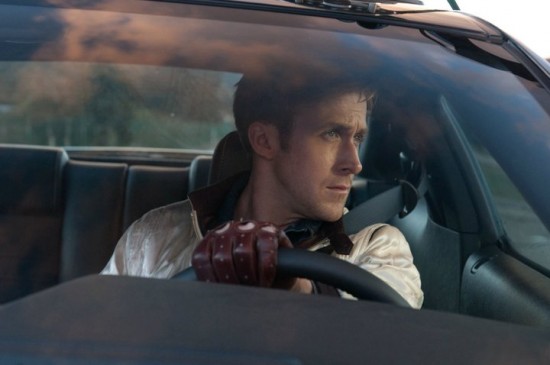
The unnamed hero (Ryan Gosling) is a stunt car operator and mechanic who moonlights as a getaway car driver. He meets the girl next door (Carey Mulligan); they fall in love; life is good. But when the girl’s husband comes home from prison, in debt to thugs, our paramour offers to help satisfy the husband’s debt. He volunteers to drive the getaway for a burglary that will clear the debt—but the heist goes horribly awry, someone ends up dead, and he narrowly escapes. Now on the run from the mob, and intent on protecting himself and the one he loves, he fights back.

Ryan Gosling is incredible. His face and expressions exude such a mix of boyish charm and grandfatherly sageness that he melts into his character and you can’t help but root for him. Forget the fact that his character is a criminal and eventually a murderer. You like him. You want him to live. You want him to win. The supporting cast also performs very well, notably Carey Mulligan and Bryan Cranston.

The plot is strong—complex but never confusing. The dialogue is incredibly sparse and much of the story and emotion is carried by the non-verbal action on screen. Long silences, extended slow-motion shots and awkward and unnatural pauses add a certain ethereal quality. The soundtrack is unexpected, a blend of 80s styles and electro-pop score. These attributes all combine to give the film a unique feel—a bizzare, highly stylized indie action flick with no flashy CGI, big explosions or elaborate set pieces. Its minimalism is its greatest strength.

Even though I had been warned, the violence was brutal and disturbing. The last half of the movie presents death after death, killing after killing. The shift from atmospheric drama to wild action movie is jarring, kicking my pulse into overdrive. Heads explode, skulls are bashed in and knives slash in an unrelenting and shockingly bloody assault.

The little dialogue is polluted by plenty of profanity, usually uttered in long spurts by the most vile characters. It’s unnecessary but not glaringly out of place as it fit with the characters’ despicable villainy. One scene in a strip club, I’m told, shows some nudity, but I can’t tell you any more than that—I fast forwarded.

Drive is slow-paced yet frenzied; laid back yet it will quicken your pulse. It’s bloody, it’s graphic, it’s unrelenting, and it’s stylistically unlike any other film I’ve seen. It's brilliantly engineered but difficult to stomach.

Sunday, October 9, 2011

Limitless (2011)

Imaginative visuals, an absorbing storyline, and a disquieting topic make it a trip.


Limitless is part action, part geeky—too introspective to really belong in the first category, but too frenetic and fast-paced for the latter. The fourth movie to be directed by relative unknown Neil Burger, it has some rough edges—although, on the whole, I was positively impressed.

Eddie Morra (Bradley Cooper) is both protagonist and first-person narrator, and the sequence of the movie follows closely the personal details of his sometimes vivid, often hazy, and occasionally schizophrenic life. The story opens some twenty stories high, with Eddie poised on the edge of a rooftop, his toes hanging over the brink—but instead of the cinematic freefall I expected, the film kept me continually on edge.

The crux of the tale is thus: never-do-well Eddie comes across a super-drug, NZT-48, which unlocks the unused potential of his brain, allowing him to learn new skills, put details together in unimagined ways, and maintain a surge in creativity. But like all drugs, it has side effects—and this particular one includes relentless thugs and Russian mafia who won’t hesitate to kill to get the pills. Eddie suddenly is confronted by the temptations and threats of limitless achievement, imminent self-destruction, determined enemies, and a limited stock of NZT-48.

The camera-work was phenomenal. A signature effect was the mile-long zoom down city streets, through windows and cars, in and out of crowds, beyond mirrors. When Eddie first took the NZT-48, everything became crisp and clear, shadows faded away, light spread. Colors melded, melted, blurred and blazed. His view of his surroundings expanded like the widening lens of a camera, obscure details reorganizing into useful patterns and prompts—and pictures skipped crazily as hours disappeared in seconds. The visual effects alone are worth seeing.

Cooper is an able and enjoyable actor. From the unkempt man on the street to the almost superhuman Wall Street consultant, he always appeared comfortable in his role(s), yet never lost his unique style. The supporting actors also fit excellently: as Eddie’s on-again-off-again girlfriend (Abbie Cornish), as the sharp investment broker (Robert De Niro), as the accented mafioso who rued his minced vocabulary (Andrew Howard). While these secondary characters were somewhat one-sided and incompletely developed, they were also human and feeling.

The movie’s score was largely trash, too often harsh and strident, psychedelic trance composed of electronic drum machines and an eternally recurrent refrain—which harmonized with the narcomanic nature of the movie’s theme, but earned no place in my off-screen playlist. It didn’t jar; it just didn’t impress.

Brief flashes of disturbing material complicated my general liking for the movie: a series of fleetingly passionate sexual encounters; a couple shots of disarmed hands hacked off their owners; PG-13’s one escalation of vulgarity in a verbal confrontation; and one disgusting yet hypnotic scene where a man struggles to lap from a drug-rich pool of blood as it horribly spreads its perimeters. In any case, these segments were emphasized more by their scarcity than their abundance.

While the plot showed numerous incoherencies, all were scruples; none detracted from my viewing. The story was at times predictable and unexpected; controversial and tame; hackneyed and original; maddening and mentally provocative. It was strange, but not too strange; striking, but not staggering. With reservations, I couldn’t help but like it.

Maybe most unnerving was its elevation of the highs of the central substance; I felt an uncomfortable tension between the allure of NZT’s potential and the poison of its sting. In the upside-down world of the drug, Eddie’s aspiring spirals sometimes seemed like tailspins. If the movie was making some broad statement about narcotics, its interpretation is limitless.

Wednesday, September 28, 2011

Contagion (2011)

Shocking, grotesque, claustrophobic, paranoid, terrifying. A must-see.


My eyes twitch. My throat tightens. I feel a cough coming on. I fight the impulse to rub, cough or blink. Is this the byproduct of my hypochondria, or the paranoia of the film I’m watching? Maybe both? All I know is that I dare not touch my face, my body or the package of M&M’s sitting on my lap. Disease is everywhere. The knob of a door, the rail in a bus, the armrest of a chair, the kitchen counter, the human hand, and don’t even get me started on airplanes.

This is a horror film like no other. I shudder as a man touches a handrail, a waitress hands a patron a cocktail glass, a mother feeds her child a cookie. These everyday actions become menacing, dangerous, deadly.

But that’s how it starts. “The average person touches their face three to five times every waking minute. In between that we're touching door knobs, water fountains, and each other.” These “fomites” (objects capable of transferring infection between individuals) are all potentially festering with viral plague, waiting to mutate and start an epidemic.

Contagion.

People contract fevers, have seizures and die. Within 48 hours, cases of the virus all over the world are reported. Panic runs rampant. The CDC and the World Health Organization scramble for answers, desperate to identify the virus and find a cure. But this takes time. Weeks pass and the dogged determination of medicine’s best minds can’t keep up with the rising death toll. One in twelve will die; the whole world is infected.

But against this epic backdrop of worldwide panic and devastation come several stories, stories of people we grow to love and loathe. The father (Matt Damon) desperately trying to keep his daughter safe, devastated by the loss of his wife and son. The CDC director (Laurence Fishburne) attempting to control the publicity, manage panic, find a cure, and protect his loved ones. The rogue blogger (Jude Law) intent on perpetuating frenzy and making a buck. The doctor (Jennifer Ehle) working tirelessly to find a cure. The field agent (Kate Winslet) risking infection daily to save lives. The WHO operative (Marion Cotillard) taken hostage by townspeople hoping to be the first to receive the vaccine.

Steven Soderbergh deftly handles his ensemble cast, drawing out significant emotion and character from each despite limited screen time. Ehle, Fishburne and Winslet stand out amongst a stellar cast, bringing the best performances of the film. Only Cotillard’s story seemed ancillary—there was little development and the ending was dissatisfying. The plot takes risks, killing off big name actors without thought. No character is safe and several plot twists added to the feeling of unstoppable terror.

The score is a pulsating mix of synthesizers. The constant pounding enhanced the feeling of panic and terror. The camera shakes and zooms, giving the claustrophobic feeling that you’re actually in the movie. These techniques are incredibly effective in ratcheting up the suspense.

Don’t talk to anyone. Don’t touch anyone. Stay away from other people. Contagion is not a fun film-going experience. It’s intensely disturbing and grotesque. This is a horrifying film, a frighteningly plausible look at what could happen if such events actually took place. The results are grim. Yet through the grimness there is hope. A cure can be found, relationships can thrive, forgiveness can be granted. The plot, cast and direction elevate this above the normal thriller. An effective and outstanding film.

Saturday, September 24, 2011

Midnight in Paris (2011)

Enamors with glimpses of Paris past and present but otherwise falls flat. 


I’ve never been much of a Woody Allen fan. I enjoy watching him act—his personality and witticisms crack me up—but his films have never grabbed me. He’s a critical darling (Annie Hall for Best Picture? Really?), so the 92% on the “Tomatometer” shouldn’t have elevated my expectations as much as it did. But as one of the highest rated movies of the summer—and set in one of my favorite cities—I thought I’d give it a shot.

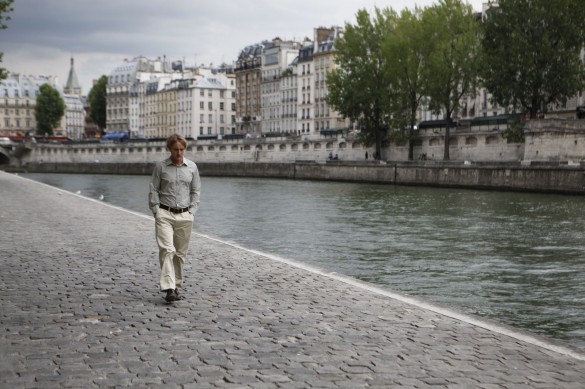
Gil (Owen Wilson) is looking for inspiration. He’s bored churning out screenplays and instead yearns to complete his first novel. He’s almost finished but it lacks…something. Seeking inspiration, Gil accompanies his fiancée Inez (Rachel McAdams) and her parents to Paris. Immediately Gil is enamored by the city’s charm and fantasizes about a future there. Walking the streets at midnight, he is magically transported back to the Paris of the 1920s where he fraternizes with musical, artistic and literary luminaries such as Cole Porter, Ernest Hemingway, Pablo Picasso and Salvador Dali. He also falls for the glamorous and mysterious Adriana (Marion Cotillard). His new friends give him perspective and insight into his novel, and Gil wonders if he might stay with them forever.

Owen Wilson ruined this movie for me. His attempt to channel the quirky and hilarious persona of Woody Allen fails miserably and instead he comes off as whiny and annoying. His nonstop talking grated my ears. He cannot carry a movie as the leading man and should stick to comedies and cameos. The supporting cast, however, boasts some outstanding performances. Marion Cotillard is cute and charming as Adriana, and Adrien Brody is spot-on as the surrealist Dali. In one hilarious scene, a confused Gil attempts to explain his midnight teleportations to Dali and his friends, but is frustrated when the artist is unperturbed and paints Gil as a rhinoceros, sad in spirit, lips melting off his face.

The story is shallow yet enchanting. The plot seemed unfocused and the moral tacked on: try and make the best of the time that you live in. But while the film falls short as a drama, it shines as a fun look at the historical City of Light. The scenery is beautiful and the mood of Paris’ streets and sights is captured so well on film, it is perhaps the best cinematic depiction I’ve seen. The glimpses of what the city must have been like in the ’20s were delightful, the energy electric and the glamour undeniable. The accordion score channeled Parisian but the constant repetition of the sole theme irritated. It’s a soundtrack I never wish to revisit.

There is little profanity and the sexual content is mild compared to Allen’s other films. Yet there are still some descriptions and discussions of sex, prostitution and homosexuality. An amoral attitude towards sex permeates the screenplay—Gil is encouraged in his romancing of Adriana in the 1920s, even while he continues his relationship with Inez in 2010.

Midnight in Paris could have been great. It was fanciful and sweet, perfectly capturing the allure of Paris, both present and past. But Owen Wilson’s ridiculous acting, the shallow plot, and the blasé attitude towards morals nearly cripple the film. It’s an average movie, neither good nor great. Enjoy it for the setting alone, or not at all.

Tuesday, September 6, 2011

The Help (2011)

This is not a comedy. It is a serious but realistic look at the devastating effects of racism.


When I first saw the trailer for The Help, I had absolutely no desire to ever see the film. It was marketed as a comedy, a light and airy romp about a young girl’s quest to fight bigotry. It looked trite, schmaltzy and saccharine. But a friend convinced me I shouldn’t miss it so, still skeptical, I dragged family and friend to the theater. We all loved it.

The Help is set in Jackson, Mississippi in the early 1960s. Racism is prevalent and colored people are still treated almost as slaves. They live difficult lives and can find work only as maids, cooks and factory workers, for which they are paid almost nothing. Eugenia “Skeeter” Phelan, disgusted by her friends’ ignorant prejudice, seeks to effect a change by writing a book told from the perspective of “the help.” Barely able to survive on their piddling incomes, the maids fear the repercussions of getting involved. But as racial unfairness burgeons, the help decides that it is time for people to hear their story.

This film is not a comedy. Sure, some comedic moments had me roaring, but it is definitely a drama—a serious, disheartening and sometimes disturbing film about the destructiveness of racial prejudice. Tears came more readily than laughs as I shared in the characters’ trials and heartaches. It’s moving and sentimental, and it deals head-on with bigotry, unfairness and physical abuse.

The film ran over two hours but never felt overlong. Flashbacks and back stories made the characters more real. In one especially heartbreaking scene, the maid Aibileen recalls the death of her son after brutal mistreatment by his white employer. The dialogue is mostly good, often great, but sometimes tacky. The film was occasionally cliché and “sweet,” but these moments were brief and sparse. The ending made no attempt to be happy; I was given the impression that the worst was yet to come.

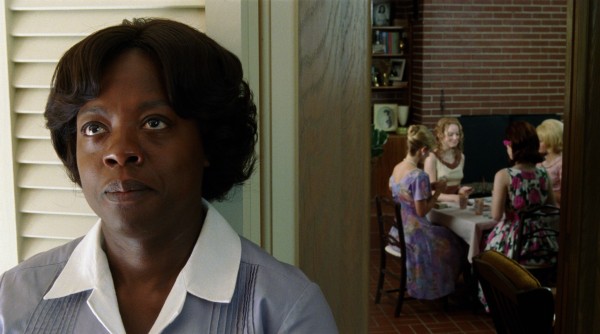
Viola Davis gives an award-worthy performance as Aibileen, the film’s narrator and the first maid willing to come forward with her stories. Emma Stone does a fine job in the role of Skeeter but I felt the casting wasn’t a perfect fit. Bryce Dallas Howard portrays the hateful Hilly, a crusader with a shocking animosity towards blacks and their “strange diseases.” Octavia Spencer is hilariously sassy as Minny and provides great laughs while supporting an emotional subplot.

Bad language is sporadic but sticks out like a sore thumb. While some of it fits within the context of the story, especially in a highly comedic running gag about human waste, mostly it feels out of character and unnecessary. There are a few discussions of sexual activity. One bloody scene shows the aftermath of a miscarriage, but nothing graphic. There is some brutal violence which, while never shown, made me sick to my stomach.

The cinematography is bright and colorful, in stark juxtaposition to the dark undertones of
the film. The costume was authentic and the locations made me feel like I was in ‘60s Mississippi. Newman’s score was gorgeous, often light and sweet, driven by high notes of the piano. This was accompanied by an eclectic assortment of songs appropriate to the era. Cash’s Jackson appears in an early scene, a nod to the film’s setting.

The Help is my kind of film. It had an outstanding plot that delved into deep and serious themes, boasted an outstanding cast, had great character development and humor, and educated its audience about the horrors of racial intolerance. This film does an excellent job portraying one of the darkest times in American history, and I was disturbed to realize that all this happened so recently. The film is already generating much-deserved Oscar buzz. Put it at the top of your to-see list.

Monday, August 22, 2011

The Adjustment Bureau (2011)

A well-made movie that raises intriguing questions, but gives no answers.


Enforcer: You don't have free will, David. You have the appearance of free will.

David Norris: You expect me to believe that? I make decisions every day.

Enforcer: You have free will over which toothpaste you use, or which beverage to order at lunch. But humanity just isn't mature enough to control the important things.

Free will or predestination? I was surprised to find such a timeless question at the forefront of this big-budget Hollywood film. It’s a difficult discussion that no filmmaker could possibly develop in 100 minutes, but The Adjustment Bureau provides both a thought-provoking plot and an entertainingly slick production.

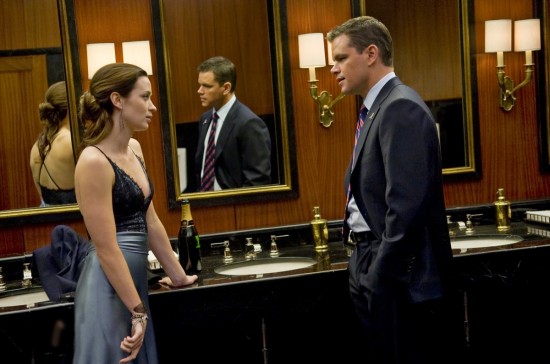
David Norris (Matt Damon) has just lost the senatorial election by a landslide. He walks into the deserted men’s bathroom to practice his concession speech, but his impassioned rehearsal is interrupted by Elise (Emily Blunt), a woman hiding from security in a stall. Though their meeting is awkward, the electricity between them is undeniable. But their love is not meant to be. Their lives are [supposed to be] on different paths, orchestrated by the Adjustment Bureau, an organization that painstakingly ensures that each person’s appropriate destiny takes place. David fights back against the Bureau, wanting above anything to be with Elise. But as the fight escalates, he quickly learns that gaining Elise will mean losing everything.

Contrary to the trailers’ suggestion, this is not an action film. This is a slowly paced drama with only a few thrilling sequences; interest is mostly kept by a mysterious, supernatural plot and some unexpected twists. Every supernatural thriller and sci-fi film has the difficult task presenting a new universe where new “rules” apply. Sometimes this is done seamlessly, the audience lured into suspending their disbelief. But in this film, the “rules” of David and Elise’s fictional reality appear arbitrary, unbelievable, and even downright ridiculous. And since these rules are necessary to propel the story, the plot itself irritated me on several points—such as the Adjustment Bureau’s inability to function around water, or the necessity that all operatives wear hats. It drove me crazy.

The acting is generally good from Damon and Blunt, and Terence Stamp unnerves as the creepy and soulless Thompson, the Bureau’s top enforcer. The dialogue had some good comedic moments, relaxing the tense atmosphere, but at times it felt awkwardly unnatural and forced, as though there was a lack of real chemistry between the leads. The dialogue was also frequented by profanities, and sex was used to propel character development as the lovers slept together in a steamy (yet non-explicit) scene that distracted from the true beauty of their relationship.

The score was fitting but not extraordinary. Thomas Newman’s orchestrations are simple, relying heavily on simple piano themes, soft strings, and the gentler percussion instruments. The score added depth to each scene and reflected the emotion of the moment.

The Adjustment Bureau raises interesting questions and forced me to ponder and really contemplate the ideas behind its story. The conclusions are theologically troubling, as the story analogizes the Adjustment Bureau to God and angels, but it does provide fodder for discussion. I won’t be changing my worldview because of it, but the viewing caused me to re-examine my own thoughts on the issue of free will versus destiny.

But despite its questions, the movie never provided any real answers. Perhaps the filmmakers didn’t know how to properly tackle such a huge subject; perhaps they were purposely vague to promote independent thought. The film generates good discussion starters and features a strong cast and bold, if underdeveloped, storyline. It had amazing potential. But instead of greatness it is just okay. I didn’t love it; I didn’t hate it. Watch it and decide for yourself.